
Why Your Vehicle Suspension System Dictates Comfort
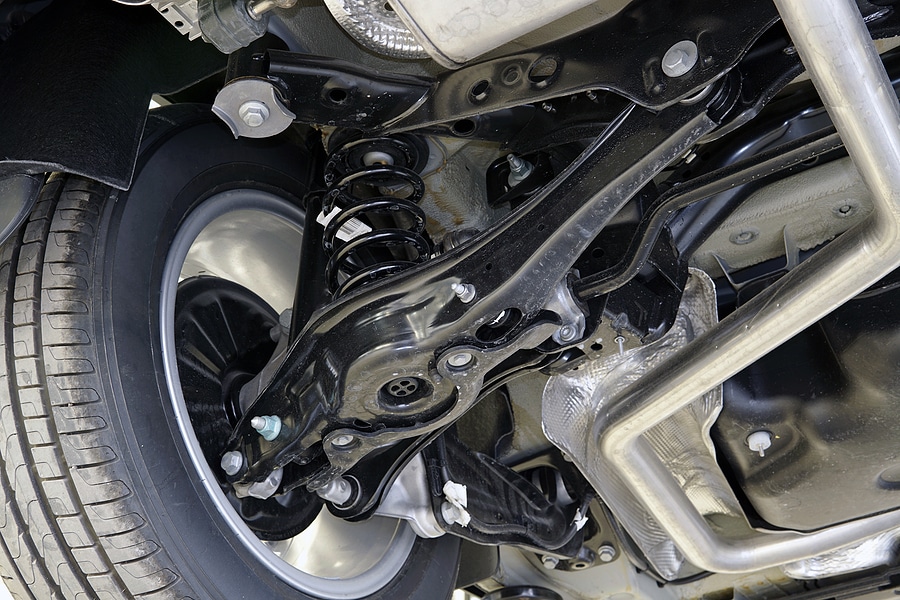
When drivers evaluate the comfort of a car, truck, or SUV, their attention naturally gravitates toward surface-level luxury. Plush leather upholstery, heated memory seats, acoustic laminated glass, and high-end infotainment screens routinely dominate showroom discussions. Yet, even the most exquisitely crafted automotive cabin becomes intolerable within ten minutes if the underlying chassis shakes over every pavement expansion joint or rolls sickeningly through minor highway curves.
True vehicular comfort is a dynamic, mechanical sensation governed almost entirely beneath the vehicle floorboards. The automotive suspension system serves as the foundational buffer between the violent, irregular contours of the road surface and the delicate human anatomy resting inside the passenger cabin. By managing kinetic energy, isolating harsh vibrations, and regulating bodily motions, the suspension dictates whether a journey feels effortless or utterly exhausting.
The Core Mandate of Suspension: Isolation Versus Contact
Every vehicle suspension must reconcile two fundamentally opposing physics objectives: isolation and tire contact.
From a safety perspective, tires must press down against the road surface at all times to maintain traction for braking, steering, and acceleration. If a wheel bounces off the pavement over a crest or ripple, the vehicle temporarily loses the physical ability to maneuver or stop. Conversely, passenger comfort demands complete separation from those same impacts. If the chassis rigidly mirrored every dip, stone, and seam in the asphalt, the driver and passengers would experience constant, bone-jarring vertical accelerations.
A comfortable suspension successfully filters out the high-frequency vibrations and low-frequency oscillations of rough asphalt while maintaining constant, predictable contact between the rubber tread and the pavement. When this delicate mechanical equilibrium is achieved, the vehicle feels planted, quiet, and stable.
The Primary Mechanical Players in Ride Quality
To understand how comfort is created, it helps to examine the core suspension components and how they work in harmony to control kinetic energy.
-
Coil, Leaf, and Air Springs: Springs are the flexible buffers that support vehicle weight and permit wheel movement relative to the chassis. When a wheel encounters an elevated bump, the spring compresses, storing kinetic energy instead of instantly shoving the entire vehicle upward. While traditional steel coil and leaf springs rely on static metal deflection rates, modern air suspension systems utilize pressurized rubber bellows that can adjust internal volume and firmness dynamically, delivering a remarkably plush, floating ride quality.
-
Shock Absorbers and Struts: Springs are exceptional at absorbing impacts, but left alone, an impact causes an undamped spring to rebound violently and bounce uncontrollably for hundreds of yards. Shock absorbers, technically called dampers, convert that stored kinetic energy into heat energy through hydraulic resistance. Hydraulic fluid is forced through microscopic valve orifices inside the damper tube, transforming sharp, violent oscillations into smooth, controlled motion.
-
Elastomeric Bushings: Every metallic suspension link, control arm, and sway bar mounts to the vehicle frame via specialized rubber or polyurethane bushings. These dense elastomeric inserts act as acoustic and tactile insulators, filtering out harsh, high-frequency road drone and micro-vibrations before they travel into the subframe and cabin floor.
-
Sway Bars and Stabilizer Links: While straight-line comfort depends heavily on vertical compliance, lateral comfort relies on sway bars. These torsion bars transfer force between the left and right wheels during cornering to prevent excessive body lean. Without proper roll control, passengers slide laterally across their seats, which triggers instinctive physical muscle tension to stay upright.
Unsprung Weight: The Hidden Comfort Enemy
One of the most critical engineering concepts governing automotive ride comfort is the ratio between sprung weight and unsprung weight.
Sprung weight encompasses everything supported directly by the vehicle suspension springs, including the frame, body panels, engine, transmission, cabin interior, and passengers. Unsprung weight includes everything between the road and the springs: tires, wheels, brake calipers, brake rotors, wheel hubs, and portions of the control arms and suspension knuckles.
When a vehicle hits a bump, the unsprung mass is violently accelerated upward. If that unsprung mass is heavy, such as a large steel wheel mounted to a heavy cast-iron solid axle, its tremendous upward momentum overpowers the spring and damper, transmitting a sharp jolt directly into the body. Conversely, if the unsprung components are lightweight aluminum alloys, their upward inertia is tiny, allowing the spring and shock absorber to catch and dissipate the movement effortlessly. Luxury and touring vehicles prioritize lightweight aluminum suspension assemblies specifically to preserve soft, serene ride characteristics.
Managing the Spectrum of Body Motion
Human physiology does not perceive all vehicular motion equally. Certain frequencies and movements trigger profound physical fatigue, joint strain, and motion sickness. A finely tuned suspension system works relentlessly to neutralize three primary spatial motions.
-
Pitch: Pitch refers to front-to-back rocking around the transverse axis of the car, commonly triggered during hard acceleration or firm braking. Excessive forward nose-dive during stops causes passengers to slide forward against seat belts, creating muscle tension in the core and neck. Well-engineered suspension geometry incorporates anti-dive and anti-squat angles to keep the chassis flat under varying brake and throttle loads.
-
Roll: Body roll represents the lateral lean of the vehicle as it navigates turns or roundabouts. If a suspension is tuned too softly without adequate lateral sway management, the chassis wallows and lists heavily in corners. This persistent lateral rocking is the primary instigator of vestibular confusion and car sickness among passengers.
-
Heave and Bounce: Heave describes the uniform vertical displacement of the entire vehicle chassis when traversing large highway undulations. If the damping valves are calibrated incorrectly, the chassis will float or float-and-crash repeatedly. Maintaining a controlled, single-cycle heave motion keeps occupants feeling secure and physically relaxed.
Passive Versus Adaptive Damping
Traditionally, suspension systems were purely passive. Automotive engineers had to pick a single fixed damping curve: either soft for cushioned cruising at the expense of wallowing cornering, or stiff for razor-sharp handling at the expense of spine-jarring comfort.
Modern adaptive and semi-active suspension setups eradicate this compromise. By employing magnetorheological fluid or high-speed electronic bypass valves, modern dampers alter their internal fluid resistance within milliseconds. Forward-facing stereo cameras scan the road ahead for potholes, frost heaves, and dips, signaling the electronic control unit to momentarily soften a specific damper just before the wheel strikes the obstacle. Once the hazard has cleared, the suspension firms up instantly to maintain body flat-plane control through the next curve, delivering an uncanny blend of dynamic poise and cloud-like comfort.
The Wear Factor: How Aging Suspension Destroys Ride Comfort
Even the most sophisticated suspension architecture gradually loses its ability to isolate cabin occupants as miles accumulate. Because suspension wear occurs progressively over years, many drivers fail to notice how degraded their ride comfort has become.
-
Hydraulic Fluid Degradation: Over tens of thousands of miles, the hydraulic oil inside shock absorbers shears down and breaks down under sustained friction heat. Microscopic internal valve wear allows fluid to bypass internal passages without resistance, turning a once supple ride into a floaty, uncontrolled, bouncy experience.
-
Bushing Hardening and Tearing: Exposure to road salt, engine oil leaks, ozone, and extreme weather slowly hardens automotive rubber bushings. Dry, cracked, or torn bushings lose their elasticity, converting previously quiet road expanses into noisy, shuddering paths full of rattles and clunks.
-
Spring Sagging: Constant gravitational load gradually relaxes the structural steel of suspension springs, reducing overall suspension travel. When a vehicle rides too low on fatigued springs, the suspension frequently bottoms out against hard rubber bump stops over modest road imperfections, transmitting bone-rattling shocks straight into the cabin.
Frequently Asked Questions
How do low-profile tires impact the perceived comfort of a vehicle suspension?
Tires act as the initial spring in the suspension system. A standard tire with a tall sidewall contains a large volume of air that cushions small, sharp road impacts before they ever reach the metal suspension components. Low-profile tires feature ultra-short, rigid rubber sidewalls that lack vertical deflection. Consequently, sharp road impacts bypass the tire sidewall entirely, sending harsh vibrations straight through the wheels and suspension links into the passenger cabin.
Why does my vehicle ride much rougher in freezing winter temperatures?
Suspension dampers rely on hydraulic oil flowing through tiny internal valves to manage motion. In freezing temperatures, this hydraulic fluid thickens considerably, drastically increasing resistance and making the shock absorbers feel excessively stiff until sustained friction warms the fluid. Additionally, cold temperatures temporarily stiffen the rubber compound in suspension bushings, reducing their ability to absorb high-frequency road vibration.
Can replacing worn shock absorbers eliminate highway driving fatigue?
Yes. When dampers are worn, the vehicle chassis constantly undergoes subtle, continuous pitch and roll motions over seemingly smooth roads. Occupants unconsciously contract their neck, back, and core muscles to stabilize their bodies against this continuous micro-movement. Replacing worn dampers restores body control, eliminating continuous physical tension and dramatically reducing passenger fatigue on long trips.
What is the difference between a harsh ride and a firm ride?
A firm ride describes a well-damped, controlled suspension that tracks the road surface closely without excessive body roll or floating, yet rounds off the sharp edges of impacts cleanly. A harsh ride occurs when the suspension fails to isolate occupants from sharp road impacts, transmitting abrupt, high-frequency shocks, vibrations, and loud clunks directly into the cabin structure.
How does vehicle wheelbase length correlate to suspension comfort?
A longer wheelbase naturally creates a smoother, more comfortable ride. When the front and rear wheels are spaced farther apart, the angular pitch of the body over bumps is substantially smaller compared to a short-wheelbase vehicle hitting the exact same road imperfection. Long-wheelbase sedans and full-size SUVs experience slower, more gradual vertical weight transfers, giving the springs and dampers more time to manage motion.
Do coilover suspension kits improve or degrade everyday street comfort?
Most aftermarket coilovers prioritize track performance, handling grip, and lowered aesthetic ride heights. They typically utilize significantly stiffer spring rates, firmer valving, and rigid spherical pillow-ball mounts instead of compliant rubber bushings. While coilovers drastically reduce body roll during aggressive driving, they generally compromise everyday passenger comfort by transmitting significant road harshness directly into the chassis.
Why do pickup trucks often ride much rougher when their cargo beds are empty?
The rear suspension of a pickup truck is engineered with heavy-duty springs designed to support several thousand pounds of cargo or tongue weight. When the truck is driven completely empty, the rear springs are barely deflected and operate well outside their optimal compliance range. Without weight pressing down on the rear axle, the stiff springs cannot compress easily over bumps, causing the rear end to skip, buck, and bounce over routine road flaws.